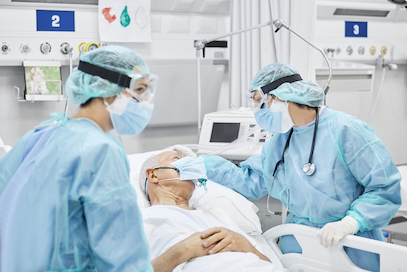
A study carried out in 2015 looked into the relationship between the nature of death and bereavement intensity following death in the adult critical care environment and how coping responses affected the intensity of bereavement.
As part of the study, 78 participants completed a questionnaire within two weeks of bereavement, and then at 3 months and 6 months respectively.
The major findings in this study were:
- That bereavement intensity at 6 months was higher following a drawn-out death, a violent death and if the deceased appeared to suffer more than expected.
- Difficulty acknowledging or accepting the death was associated with a person having higher bereavement intensity at both 3 and 6 months.
- Bereavement intensity was significantly lower at the 6-month assessment compared to 3 months, with no differences between men or women, between partners or parents and no associations with age;
- Generally coping responses did not significantly change from 3 to 6 months except for increases in acceptance and planning;
- That greater use of emotional support, self-blame and denial were independently associated with higher bereavement intensity at 6 months.
- There was a higher alcohol intake in men within the first 2 weeks of bereavement and at 6 months, men reported higher use of substance or alcohol as a coping mechanism.
Research has found that approximately 33% of individuals in bereavement may use self-blame (which is sometimes seen as a form of guilt) when their loved one dies, with 20% feeling that an action they could have changed had contributed towards the deaths, and 30% blamed themselves for the death.
Conclusion
The study concluded that for deaths in the critical care environment, bereavement intensity remains high at 6 months following the death of a partner or child, but they do decrease over time from 3 months.
At 6 months after the death of a loved one, the bereavement intensity is higher following a drawn-out death, a violent death and if the deceased appeared to suffer more than the relative expected. Self-blame and denial were also independently associated with higher bereavement intensity.
References:
A full list of references is available in the Reference Material section
- Barnet, L. ed. (2009) When Death Enters the Therapeutic Space: Existential Perspectives in Psychotherapy and Counselling. Hove: Routledge.
- Bowlby, J. (1997). Attachment and loss: Vol. 1. Attachment. London: Pimlico.
- Buckley, T. et al. (2015). The nature of death, coping response and intensity of bereavement following death in the critical care environment. Australian Critical Care, 28(2).